Growth is a positive sign for any business.
More customers, more employees, more projects, and more opportunities usually mean the company is moving in the right direction.
But growth also creates complexity.
What worked for a small team may stop working when the business expands. Spreadsheets become difficult to maintain. Files are stored in different places. Project updates are shared across messages. Employee records become inconsistent. Managers spend more time searching for information instead of making decisions.
This is why growing businesses need a central management platform.
A central management platform brings company operations into one connected system. It gives business owners, managers, and employees a clear place to manage work, people, files, notifications, and reports.
TenantSaaS is designed to provide this kind of centralized business environment.
What Is a Central Management Platform?
A central management platform is a system that connects different areas of a business in one place.
Instead of using separate applications for every activity, the company manages important operations through one shared platform.
A central platform may include:
Company workspaces
Team management
Employee records
Roles and permissions
Projects
Tasks
Timesheets
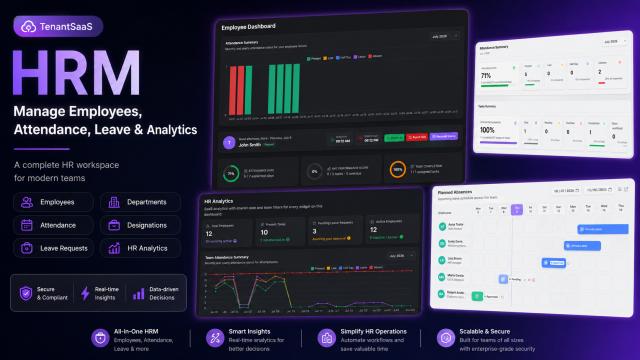
Attendance
Leave requests
Files
Notifications
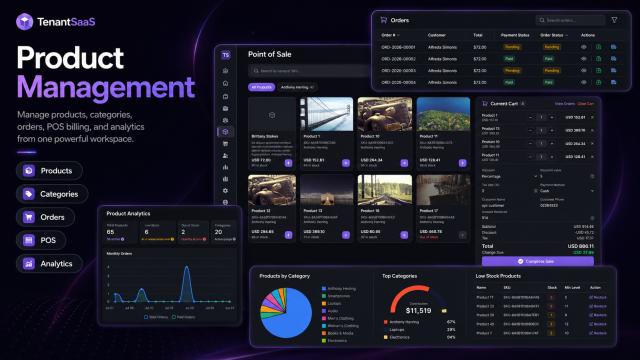
Products
Blog content
Reports
Analytics
The goal is not simply to add more features.
The goal is to create one reliable system where business information stays organized and connected.
Why Businesses Outgrow Simple Tools
Many companies begin with basic tools because they are fast and inexpensive.
A small business may use:
Spreadsheets for employee records
Messaging applications for tasks
Email for file sharing
Separate calendars for deadlines
Manual attendance sheets
Different tools for projects and reports
This may work when only a few people are involved.
As the company grows, several problems appear:
Information is duplicated
Records become outdated
Files are difficult to find
Responsibilities are unclear
Managers lose visibility
Employees miss updates
Reports take longer to prepare
Access becomes difficult to control
At this stage, the business needs more than another spreadsheet.
It needs a structured system.
One Source of Truth
A central management platform gives the company one source of truth.
This means important information is stored and managed in one reliable place.
For example:
Employee information comes from the employee system
Project progress comes from project records
Task status comes from assigned tasks
Attendance comes from attendance records
Timesheet data comes from logged work
Files remain connected with the correct record
Reports use information from the same platform
This reduces confusion caused by multiple versions of the same data.
Managers no longer need to ask which spreadsheet is current or which message contains the latest update.
Better Visibility for Business Owners
Business owners need a clear understanding of what is happening across the company.
Without a central system, they may need to check several tools to answer basic questions:
How many projects are active?
Which tasks are overdue?
Who is present today?
Which leave requests are pending?
How much time has been logged?
Which products are active?
What changed this week?
A centralized dashboard can present this information in one place.
This allows owners to identify problems earlier and make decisions with better information.
Clearer Team Management
As the team grows, access and responsibilities need to become more structured.
A central platform allows companies to manage:
Team members
User invitations
Roles
Permissions
Workspace access
Employee records
Managers
Departments
Designations
This creates clearer boundaries.
A project manager can manage projects without receiving access to sensitive HR settings. An employee can view assigned tasks without changing company-wide configuration. An owner can maintain full control.
This improves security and makes the platform easier to use.
Stronger Employee Management
Employee management becomes difficult when records are spread across files and spreadsheets.
A central platform helps businesses maintain structured employee information such as:
Personal details
Department
Designation
Manager
Attendance
Leave
Employment status
Onboarding information
Policies
Account access
This makes it easier to keep records updated and connected with the correct user account.
Managers can review employee activity without searching through several documents.
Better Project Control
Projects are easier to manage when all related information stays together.
A central management platform can connect:
Project details
Assigned members
Tasks
Deadlines
Priorities
Files
Timesheets
Progress updates
Reports
This gives teams a shared understanding of what needs to be completed.
Managers can review progress, employees can see their responsibilities, and business owners can monitor delivery without depending on manual updates.
Improved Accountability
When responsibilities are unclear, work is easily delayed.
A central platform improves accountability by showing:
Who owns each task
What the deadline is
What the current status is
When the task was updated
How much time was recorded
Which work is overdue
This creates transparency without requiring constant follow-up messages.
Employees know what is expected, and managers can identify where support is needed.
Faster Communication
Communication becomes inefficient when updates are shared through several channels.
A central platform can send notifications for events such as:
Project creation
Task assignment
Task updates
Leave requests
Team invitations
Attendance activity
Product changes
Blog moderation
Upcoming deadlines
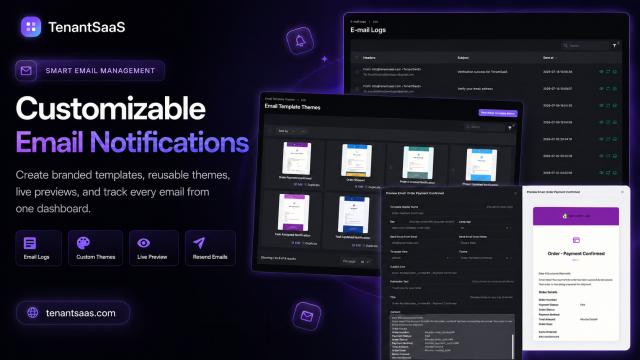
Notifications can be delivered through available channels such as email, SMS, or in-app alerts.
This keeps the right people informed at the right time.
Easier File Management
Files are often one of the most disorganized parts of a growing business.
Documents may be stored in:
Personal computers
Email attachments
Messaging applications
Different cloud drives
Shared folders without clear ownership
A central platform keeps files connected with the correct business record.
For example:
Project files stay with the project
Employee documents stay with the employee
Product images stay with the product
Blog attachments stay with the blog
Reports stay with the relevant module
This makes files easier to find and reduces the chance of using the wrong version.
More Accurate Reports
Reports are difficult to prepare when data is scattered.
Managers may spend hours collecting information from different sources.
A central management platform can generate reports from connected records.
Examples include:
Project reports
Task reports
Attendance reports
Timesheet reports
Employee reports
Product activity reports
Business summaries
Because the data comes from the same platform, reports are more consistent and easier to verify.
Better Business Decisions
Good decisions depend on clear information.
A central platform helps business owners compare:
Current activity
Previous performance
Team workload
Project progress
Attendance patterns
Product activity
Usage limits
Business growth
This turns daily activity into useful insights.
Instead of relying on assumptions, managers can review actual data.
Reduced Duplicate Work
Duplicate work happens when information must be entered into multiple systems.
For example, an employee may be added to:
A spreadsheet
A project tool
A communication tool
An attendance system
A file-sharing platform
A central platform reduces this repetition.
The employee can be created once and then connected with projects, tasks, attendance, timesheets, and permissions.
This saves time and reduces errors.
Lower Software Complexity
Using many tools also creates technical and financial complexity.
The company must manage:
Multiple subscriptions
Different login systems
Separate permissions
Different support channels
Repeated training
Data exports and imports
Integration problems
A central platform reduces the number of disconnected systems the business depends on.
This makes onboarding easier for new employees and lowers the effort required to maintain operations.
Better Security
A growing business needs stronger access control.
Shared passwords, public spreadsheets, and personal file storage create security risks.
A central platform can use:
Individual user accounts
Roles
Permissions
Tenant-aware access
Policies
Record ownership
Secure authentication
Activity tracking
This helps ensure that users only access the information required for their role.
Security becomes part of the business process instead of an afterthought.
Support for Multiple Companies
Some business owners manage more than one company or brand.
A central multi-tenant platform allows them to manage several companies from one account while keeping each workspace separate.
Each company can have its own:
Employees
Projects
Tasks
Files
Products
Notifications
Settings
Reports
This gives the owner central access without mixing company data.
TenantSaaS is built around this multi-company approach.
Support for Remote and Hybrid Teams
Remote and hybrid teams need shared access to information.
A central platform gives authorized users access to:
Projects
Tasks
Files
Attendance
Timesheets
Notifications
Reports
Employees can work from different locations while using the same business system.
Managers can review progress without depending entirely on meetings or messages.
AI-Assisted Management
A central platform becomes even more useful when combined with AI assistance.
TenantSaaS includes AI-powered features that may help users:
Summarize project activity
Find overdue tasks
Explain analytics
Prepare reports
Draft content
Review notifications
Find records
Support daily planning
Because the AI works inside the same business environment, it can provide more useful assistance than a disconnected tool.
Access must still follow user roles and tenant permissions.
A Practical Example
Imagine a company with thirty employees and several active projects.
Before using a central platform:
Employee records are kept in spreadsheets
Tasks are discussed in messages
Files are stored in different drives
Attendance is recorded manually
Reports are prepared by copying data
Managers spend hours checking updates
After moving to TenantSaaS:
The company creates one workspace
Employees are added and organized
Roles and permissions are assigned
Projects and tasks are managed centrally
Attendance and timesheets are recorded
Files are attached to the correct records
Notifications are sent automatically
Managers review dashboards and reports
AI helps summarize activity
The business becomes easier to understand and manage.
Signs Your Business Needs a Central Platform
Your company may need a central management platform if:
You use too many disconnected tools
Employees cannot find the latest information
Managers prepare reports manually
Files are stored in several locations
Tasks are frequently missed
Permissions are difficult to control
Employee records are duplicated
Business owners lack clear visibility
Onboarding takes too long
Teams depend heavily on messages for work updates
These problems usually become more expensive as the business grows.
How TenantSaaS Helps
TenantSaaS brings multiple business functions into one tenant-based platform.
Businesses can use it to manage:
Companies
Teams
Employees
Projects
Tasks
Timesheets
Calendars
Reports
Files
Notifications
Products
Blog content
Analytics
AI-assisted workflows
Each company receives its own workspace with separate records and access rules.
This allows businesses to start with essential features and expand as their needs grow.
Start with the Most Important Areas
Moving to a central platform does not require changing everything at once.
A practical approach is:
Create the company workspace.
Add team members.
Configure roles and permissions.
Create employee records.
Move active projects and tasks.
Organize important files.
Enable attendance or timesheets.
Configure notifications.
Review dashboards and reports.
Add more modules gradually.
This reduces disruption and makes adoption easier.
Final Thoughts
Growth creates opportunities, but it also creates complexity.
A business that continues using disconnected tools may struggle with duplicate work, poor visibility, weak communication, and inconsistent data.
A central management platform provides the structure required for long-term growth.
TenantSaaS gives businesses one connected environment for managing people, projects, files, notifications, content, products, analytics, and daily operations.
The result is a business that is easier to organize, easier to understand, and better prepared to scale.
Build a Stronger Business with TenantSaaS
Create your company workspace, bring your team and operations together, and manage growth from one centralized platform.
Start with the available free option and expand as your business needs increase.